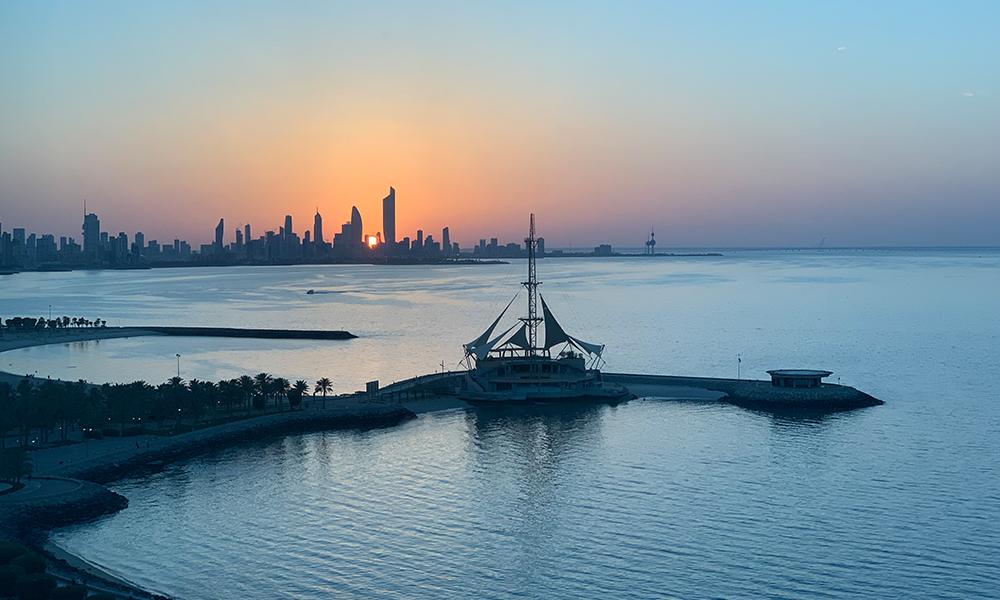
Someone asked me recently about where to get a painting of Kuwait by a local artist (not necessarily a Kuwaiti artist). Well, here ya go....


Someone asked me recently about where to get a painting of Kuwait by a local artist (not necessarily a Kuwaiti artist). Well, here ya go....
Please SHARE this everywhere:
Touch of Hope is an animal shelter in Kuwait. (Instagram @ touch_of_hope_q8) run completely off donations and volunteers. People think, "Why help Kuwait? It is a rich country. They should take care of their own animals." Well, ZERO money is allocated to the welfare of animals in Kuwait by their government and pets are often dumped, neglected, and abused (I'm not going to be graphic, but it is BAD and it happens often). ToH works with Wings of Love Kuwait (a Baltimore-based shelter) (Instagram @ wingsoflovekuwait) to bring pets to the US to rehome. (Both run off separate entity donations.) Check out their accounts for photos and videos of their amazing work.
Touch of Hope Kuwait animal shelter is being evicted and is
in urgent need of aid! They've found a new place to create a shelter, but it
needs a LOT of work and Kuwait summer (think 120F!) is quickly approaching. Any
help is greatly appreciated! $5/$10 - anything will help.

GoFundMe
https://www.gofundme.com/f/help-stray-animals-evicted-from-their-shelter?fbclid=IwAR1ao5fC2qbvc2f1cQ1gzuOzYrkb2B9fWZuBc8WatQYPZy3gzDJpjRljFYk
A large number of rescued dogs, cats, and a horse have lost their home after an eviction notice was served at the farm in Kuwait that serves as their sanctuary. Can you help these helpless souls?
An amazing woman named Marlene has dedicated her life to the injured, abused,
and abandoned animals of Kuwait. For years she and her elderly mother
have been renting a rundown farm in the desert, just so she has room for her
many rescued animals. She works around the clock, in very challenging
conditions, and receives no official funding or support. Nevertheless,
Marlene puts a positive spin on her life. She calls her animal rescue
effort Touch of Hope. With love and tender care she rehabilitates her
rescues and prepares them to be adopted into loving, permanent homes.
But tough times for Marlene and her mom just seem to always get tougher.
Due to budget cuts at her company, Marlene lost her job. Her old car
overheated and caught fire on a dusty desert road and was damaged beyond
repair. The pandemic has made things even more difficult. Huge
numbers of house pets are being dumped on the street, and with many new
rescues, Marlene's pet food and vet bills have skyrocketed. Despite all
this, she never closes her eyes or her heart to an animal in need. It has
only been by borrowing money and with limited help through fundraising and
donations from some local animal-lovers that Marlene manages to continue caring
for the animals and giving them a touch of hope.
On August 6, 2020, Marlene received tragic news from her family in her native
Lebanon. Her home, located near the port of Beirut, was completely
destroyed in the devastating explosions.
Just when it seemed things couldn't get worse, Marlene received a notice for
IMMEDIATE EVICTION from her Kuwaiti landlord. She frantically began
searching for another farm. Options are extremely limited and she was
forced to rent a place that is badly in need of work. At least $20,000 is
needed in order to make it secure and habitable.
Please help. ANY donation, no matter how small, will be greatly
appreciated. We can't let these animals down, they have already suffered
enough! TOGETHER we can make a difference and enable Touch of Hope to
continue its vital mission.
Please share this campaign with all your contacts. Thank you for caring
and God bless you.
For more information please see: Instagram @touch_of_hope_q8
Mark at 2:48AM blog has a very interesting post recently (https://248am.com/mark/personal/us-vs-them/). He is thinking of leaving Kuwait. I think many lifelong or long-term expats have either left by now or are battling with themselves on whether to stay or leave. In Mark's case, he was born in Kuwait and his mother and father were in Kuwait long before that.
His post inspired me to write this post.
It is a hard decision. I think it is harder when you wallow in an uncomfortable situation; not feeling happy and somewhat apprehentious about what may happen when you leave. Or where you will go. Or what kind of a job you will find. And you can't have the same things as you have had in Kuwait (like a maid or cheap healthcare and insurance). And where you go: paying taxes, paying for air for tires using a credit card at the gas station, vet bills in the thousands....etc, etc. (More of that for future posts.)
Kind of like a bad romance. You've been with that person for a very long time. You know you should go (and your departure will be inevitable someday), but the constancy of it leaves you in limbo. You are comfortable in your discontent somehow. Kind of paralized in it all.
How many more expats are going through the same thing? Is it just the pandemic that is making it so bad? Or at least you tell yourself that. But really - it was getting uncomfortable even before. The pandemic has just made it really hard with people losing jobs or having their salaries cut so it pushes the decision to stay or go to the forefront.
Disclaimer: Don't get me wrong. I still love Kuwait (and God knows how much I miss the country and my friends and adopted Kuwaiti families) but the country has changed a lot since I initially washed up on it's shores in 1993. (I moved to Kuwait in 1996.)
I wrote a post about the reasons I would leave Kuwait - back in October of 2017. I left Kuwait (physically) in December of 2017, to work remotely from the US with travel to the UAE and other places when requested. I was back and forth between Kuwait and the US after that; and just before the pandemic hit hard in early 2020. I am so grateful that I moved house out of Kuwait when I did. Perfect timing.
Sidebar: Seriously, how many of us can just work remotely just using e-mail? I mean, if the pandemic has taught us anything, it is that working remotely works. Case in point: I was working on a contract recently and thought that the woman was in Kuwait (I was calling her Kuwait number). We got to talking and she told me that she is actually in Georgia. I said, "Girl! Give me your number, I'm in Virginia!" Another associate turned out to be working from London while I was calling him on a Kuwaiti number. Another, two towns away from me in Virginia.
I went through the process of getting quotes from shipping companies for my household goods and car to actually doing it - shipping it all. I had a whopping seven suitcases I would take back with me on the plane, plus the cat and the dog. The logistics!! I downsized a LOT. I couldn't stand the thought of selling my things to bargain-hangry buyers, so my process was, "Things I love to people I love." My friends came over and post-it-noted their names on things they wanted. The purge continued for 2 months - and I still ended up with a 40' container back to the US. (I wish I had taken more of some things and I equally wish I had purged more of others.) The ship takes 2 months to arrive with the container, so I brought lots of clothes in check-in luggage.
Only my really close friends knew that I was leaving "for good." I had lunch with the man who basically brought me to Kuwait the first time in 1993. He asked me why I was leaving and I told him that I was no longer comfortable living there. I felt unwelcomed (in general - as an expat). That I was feeling more doom and gloom than joy and contentment. And.... I didn't like the expat-bashing trend; especially by members of parliament and government; those with a short memory of the events that transpired in 90/91. The kind of people who forget their friends. His response was, "Oh, but they don't mean Americans or Brits...." I believe the word "expat" is all-encompassing of foreigners in Kuwait, so when a politician calls Expats, "bacteria," I take offense to it.
A million times over the years I was asked, "Are you planning to leave Kuwait someday?" My response was, "Whenever I decide it is time to go."
Time to go...
Time to be with my family. Time to buy property that is in my name with a huge yard so that my dog has a real understanding of grass and playtime. Time to pay into my eventual retirement. Time to breathe in clean air and be surrounded by trees and green and birds (and in my neighborhood - foxes and deer and skunks and bald eagles). A different kind of natural beauty where people don't litter or pollute (at least where I live).
A lot has happened since I've been away (even though I came back to Virginia every summer on annual leave). My nephew has grown into a man with his own daughter, home and business. My mom has aged and counts on me to help her. Some of the friends that I had have died. Others have just moved on with their lives; marriages, children, divorces. Oh and the time that I spent on summer vacations from Kuwait that I always spent visiting my family has turned into reeeeally nice family travel vacations together.
I'm going to write a separate post(s) about the transition and my reverse culture shock. And of course, the things I miss in Kuwait. It has been a journey. How do I feel now, three years (I can't believe it!) later: Content. Grounded. Secure.
Why am I posting this now? Well, inspiration from Mark's post and it's follow-on comments by expats for one. I have been in discussions with friends still in limbo in Kuwait wondering if they should leave. I know many expats are weighing the decision, so maybe this will get them thinking. Or maybe they'll get some comfort in knowing that they're not alone. A little support perhaps.
Expats are leaving Kuwait in droves. And unfortunately, many feel that they have no other alternative (they do!) than to dump their pets. Shelters are overwhelmed. Many people find animals and want to help.
Give Hope Club works with Touch of Hope Rescue and is an easy way to help the many rescued
animals at Touch of Hope during this crisis. Pay your monthly membership
through a link in your phone and you'll also be eligible to win great prizes in
the monthly lucky draw.
Choose from one of these memberships:
-Gold (20 KD monthly)
-Platinum (30 KD monthly)
-Diamond (40 KD monthly)
Touch of Hope works with Wings of Love Kuwait in Baltimore to fly animals out of Kuwait to homes in the US. Please help if you can. Any amount makes a big difference.
This is a very interesting article written by a Kuwaiti woman about the current situation in the country.
Source: https://blog.lareviewofbooks.org/essays/banish-reflections-kuwait/
We remain in the midst of a global pandemic. This public health disaster has cracked open fault lines that have threatened Kuwait for decades. At the start I clung to a sliver hope that the crisis might trigger radical transformation. What it has done instead is confirm that we are no longer on the road to failure. We are already there.
My rage over this brings to mind Coriolanus. The fifth century BCE general fearlessly saves Rome from the Volsces, only to have the plebeians turn on him. He refuses to give in to their demands, seeing them as a threat to the sovereignty of Rome. Coriolanus has always been an ambivalent figure. Is he a noble warrior and anti-populist banished by ungrateful citizens for telling it like it is? Or an arrogant proto-fascist punished for his disdain of the common people? I’m no judge. What draws me to Coriolanus in this moment, as I witness my nation fall, is the purity of his fury, which precisely mirrors mine.
In Shakespeare’s play, the tribunes banish Coriolanus for refusing to humble himself. In response to his punishment he declares, “I banish you.” A tirade follows in which he reprimands the people for their lack of foresight, ignorance, indecision, falling prey to rumors, and becoming their own worst enemies. He predicts that Rome, left defenseless, will be overcome by a stronger nation, as the weak often are — as Kuwait once was.
I am as livid as Coriolanus about the state of my nation. This pandemic has highlighted our utter ineptitude, even as we pat ourselves on the back for a job well done. For years I have written lamenting lost opportunities in this country once poised to become a paradise on earth. A few have been willing to do what it would take to realize Kuwait’s potential. One by one, their hope has been snuffed out. Without hope there is no future. The most dedicated continue to work selflessly without any sense of legacy. The loyal and industrious are disdained, the lazy and corrupt honored — all signs of a decadent state.
How are we failing? Let’s start with Kuwait’s handling of the pandemic. At first it appeared authorities were acting prudently, but their moment of glory fizzled out. A porous partial curfew allowed 40,000 Kuwaitis to be repatriated, accelerating contagion. By the time a three-week lockdown was in place — over two months after the first case was recorded — cases were already skyrocketing. Kuwait’s “full” lockdown included two hours to go outside for exercise without social distancing enforced, making a mockery of it. Two months after lifting the full lockdown, Kuwait’s positivity rate hovers at around 20%. Unable or unwilling to comprehend relevant data, Kuwaitis celebrate the lockdown’s great success. The first day it was lifted, cars lined up around several blocks to pull into drive-throughs at Starbucks and McDonald’s, illuminating the citizenry’s priorities.
The pandemic has also laid bare and intensified the racism structuring everyday life in Kuwait. Racism is entrenched, yet most citizens believe they are good Muslims, treating everyone with humanity. Examples of racism range from our mishandling of the bidoun — the so-called stateless Kuwaitis our government refuses to legalize — to our treatment of non-citizen residents, many of whom are victims of the corrupt kefala(sponsorship) system.
The kefala system was criticized in the early days of the pandemic, when the inhumane living conditions of migrant laborers were identified as contributing to its spread; but five months on, the system remains intact. Kefalalegalizes de facto slavery. Hiring involves negotiating a price with the current sponsor as well as the agent who legally brought the indentured person into the country. Both agent and sponsor collect money in exchange for a human body. A state that legalizes any form of slavery is a morally bankrupt state. Citizens who profit from this moral bankruptcy and do nothing to stop it are themselves morally bankrupt.
Instead of terminating the kefala system once and for all, members of parliament and prominent citizens began calling for non-Kuwaitis to be tossed out and for the public and private sectors to be magically Kuwaitized. The demographic imbalance between 30 percent citizens and 70 percent non-citizen residents is nothing new, but it has been long ignored by the 30 percent it benefits. The migrants themselves have been viciously blamed for this imbalance, as if they materialized out of thin air. The migrants have nothing to do with it. Agents and citizens acquiring and selling sponsorships could not do so without the approval of Kuwaiti officials in high places. Period.
The response of authorities to the migrant labor community during the pandemic was to barricade their residential areas with barbed wire for months, allowing those inside to mix freely. These communities were not asked whether they wanted to participate in this risky herd immunity experiment. To date, Kuwaiti areas with the highest number of cases have not been barricaded. Photos of food lines inside barricaded areas evoked the Great Depression; meanwhile, on the first day malls reopened, citizens lined up at Rolex and Louis Vuitton.
From oil rig operators, construction workers, and stevedores to garbage collectors, delivery drivers, and domestic labor, most non-citizen residents perform jobs Kuwaitis never would. It’s one thing to announce that Kuwait’s demographic must flip overnight, but unless Kuwaitis decide to do the work of running a country and a home for themselves, assertions won’t make it so. Kuwaitis should work as janitors or taxi drivers because all work is honorable and because these are the jobs some of them are best qualified to do. In a meritocracy, people get the jobs they deserve. In a declining state, people are paid to do nothing, while incompetent individuals are given jobs they are unable to carry out. This money for nothing scheme may benefit the individual in the short term, but over time it culminates in national collapse.
Another sign of failure uncovered by the pandemic is just how much of Kuwait’s social fabric is threaded with self-entitlement, intransigence, and corruption. Kuwaitis consistently flout the rules of social distancing and mask wearing. No two meters apart or masks when they exercise, making it dangerous to share public spaces. No two meters apart in supermarkets or lines, threatening those who want to survive. No two meters apart for public officials at meetings photographed for newspapers, setting a stellar example. Kuwaitis have used supermarket and hospital curfew passes to visit friends. They have partied at their beach chalets, diwaniyas (male gatherings), and farms. Most Kuwaitis don’t care about their obligation to the greater community, to protect the elderly, the vulnerable, and those putting their lives on the line. From cradle to grave, they have been conditioned to care only about their own convenience; wearing a mask and keeping a safe distance requires too much effort. That it may save their own lives matters less than maintaining their right to do as they damn well please.
We witness this ethically corrupt behavior even as we learn more about the fleecing of the national pension fund by its former head. Over $500 million stolen. Some of that money was my father’s, a physician who worked in the public health sector and at the public university for over half a century, contributing to that fund with the sweat of his brow. Some of it was mine, having paid into it for the last 26 years and counting. That crooked head of the pension fund — like his non-mask-wearing compatriots — has no regard for the greater good. Without a broad sense of responsibility and justice, a society falls apart at the seams. We are at this juncture.
What about education? I teach English and comparative literature at Kuwait University. All faculty and administration have been given paid rest from March until August. Five months without any form of online teaching for around 40,000 university students at the only public university in the country. All private universities and most private schools shifted to online teaching within weeks of closure. Not Kuwait University. Not the government school system. The argument made by authorities was that e-learning standards couldn’t possibly match in-person education and that professors and students wouldn’t be able to cope with the sudden shift online. That our current circumstances are exceptional, that the shift would last only as long as the pandemic, that we should at least give it a try, didn’t register. Our high standards had to be maintained, even at the cost of wasted salaries and wasted young minds.
This lack of logic didn’t start with the pandemic. The pandemic merely sharpens the writing on the wall: the government system of education in Kuwait has failed. For decades, countless reports have been written and submitted by institutions and individuals, local and international alike. These collect dust in neglected drawers, and nothing changes. A dumb populace, lacking the skills to think critically, maintains the corrupt status quo. Even if education shifts online, the quality of education itself will not have changed. No amount of technology can gild an archaic program. We are where we are today because of our substandard curriculum, trapped by our inability to think ourselves out of a paper bag.
What’s true of education applies also to healthcare. So far the healthcare system has not collapsed in the face of COVID-19. However, even after five months of curfew, doctors are still advising us to avoid hospitals whenever possible. A friend’s chemotherapy cycle was cancelled because the hospital has run out of the necessary medicines, endangering his prognosis; another friend’s auto-immune medication is no longer available, leaving her in chronic pain. The fear that my sick father might require an emergency visit to a hospital keeps me up at night. Even in the best circumstances, Kuwait’s healthcare system is frustrating to navigate, with a mix of excellent doctors among truly incompetent ones. How long even this frayed status can be maintained is hard to gauge. Given that the majority of doctors who work in the public healthcare system, as well as all of the nursing staff, support staff, and most technicians are non-Kuwaiti, what will happen if plans now rumbling among parliamentarians to reduce the non-Kuwaiti population by 40 percent are actualized? The pandemic is not over. The way rules are defied in Kuwait, there is no doubt we will see a second wave and a third, if we ever emerge out from under this first one. Without non-Kuwaiti healthcare workers and with the added pressure of rising COVID-19 patients, the system will shatter.
Economically the situation in Kuwait is dire, thanks not only to the pandemic, but to a lack of decisive action before it, combined with zero responsiveness during it, and heightened like never before by the shock to oil prices and the global economy brought on by it. As with the educational and healthcare systems, what needs to be done to remedy the economic crisis has been evident for years, from diversifying the oil economy to reducing unproductive public spending. Kuwait must take on public debt for growth investment; if it doesn’t, it will be bankrupt within five to seven years. There has been no sign that the government is willing to overhaul the system. Over the course of this pandemic, the government’s feeble response to the needs of small private businesses, the rental market, and labor are clear indicators that our economy is heading for a crash. Most Kuwaitis remain in denial about this result and its repercussions. Given that on August 1, 1990, few believed Iraq would invade, our capacity to assess future outcomes is, put mildly, low.
As with many other places on earth, the pandemic provided a brief respite for our environment. Now that curfews have been mostly lifted, we’re back where we started. Oil production, incineration, and unregulated motor vehicle emissions color our skies yellow, brown, and gray. Kuwait, one of the world’s smallest countries, is one of the highest per capita waste generators, just as we now have one of the highest rates of COVID-19 cases per million in the world, the lowest productivity rate in the world, and one of the highest diabetes and dementia rates in the world. Numbers to be proud of. Our coral reefs have been dying for decades; our waters and shores are thick with plastic; our fish have become toxic. Rising rates of cancer and other environmental diseases change nothing. The government and parliament can’t be bothered to exert the effort and investment required to tackle climate change since their citizens don’t care. After the lockdown was lifted, photos circulated of shorelines blanketed with plastic bottles, bags, and containers, abandoned by thousands of visitors to the country’s beaches. They consider it beneath their dignity to clean up after themselves, expecting Bangladeshi cleaners to pick up after them. That couldn’t happen, given that most of those cleaners were trapped behind barbed wire, under threat of deportation, so the mess was swept into a ravaged sea.
Like the nobles and tribunes Coriolanus scorned, Kuwait’s authorities have led the country to ruin. Like the oblivious citizens of ancient Rome, we have allowed them to do it. Racism and slavery, self-entitlement and corruption, education and healthcare in crisis, economy and environment on the brink — any one of these could bring down a nation-state. All of them together at once spells the end. This is where Kuwait stands today, without the leadership or a population intellectually and emotionally equipped to admit to the magnitude of the disaster, let alone to commit to its remedy.
Coriolanus turns away from Rome. “There is a world elsewhere,” Shakespeare’s version claims, but he is wrong. We are the worlds we make. Coriolanus could not let go, held back by hubris and a sense of pietas. He raged against Rome and its ignorant citizens to the point of war. Whether idealistic or misguided doesn’t matter; he came to a bad end.
I’ve learned his lesson. My rage serves no purpose. I write with the knowledge that my words are futile, that my love for Kuwait will remain forever unrequited. “There is infinite hope in the universe,” Kafka said, “but not for us.” So I choose to let go, despite fear and regret.
We deserve what comes next.
 |
| Arab Times, Kuwait, 8/29/19 |
 |
| RIP Beautiful Winston
You may have heard the story by now of a Kuwaiti woman
(@leya_and_winston) who brought her cat back to Kuwait from study in the States
- in the cabin - only to have the cargo company (NAS - National Aviation
Services) responsible for checking animals "loose" the cat and later
find it dead?
|

Our sweet mother Linda passed away yesterday morning. She fought hard since February 21st of this year. It has been a long, hard road for our family. She was an amazing mom and grandma, we could not have asked for better. We now have the most caring and loving guardian angel watching over us. We are reaching out with heavy hearts to ask for help to lay our mom to rest. There was a GoFundMe set up to help pay for medical bills, it is still open. Anything will help.


